Dr. Gymbro
←

#time trial

2 articles
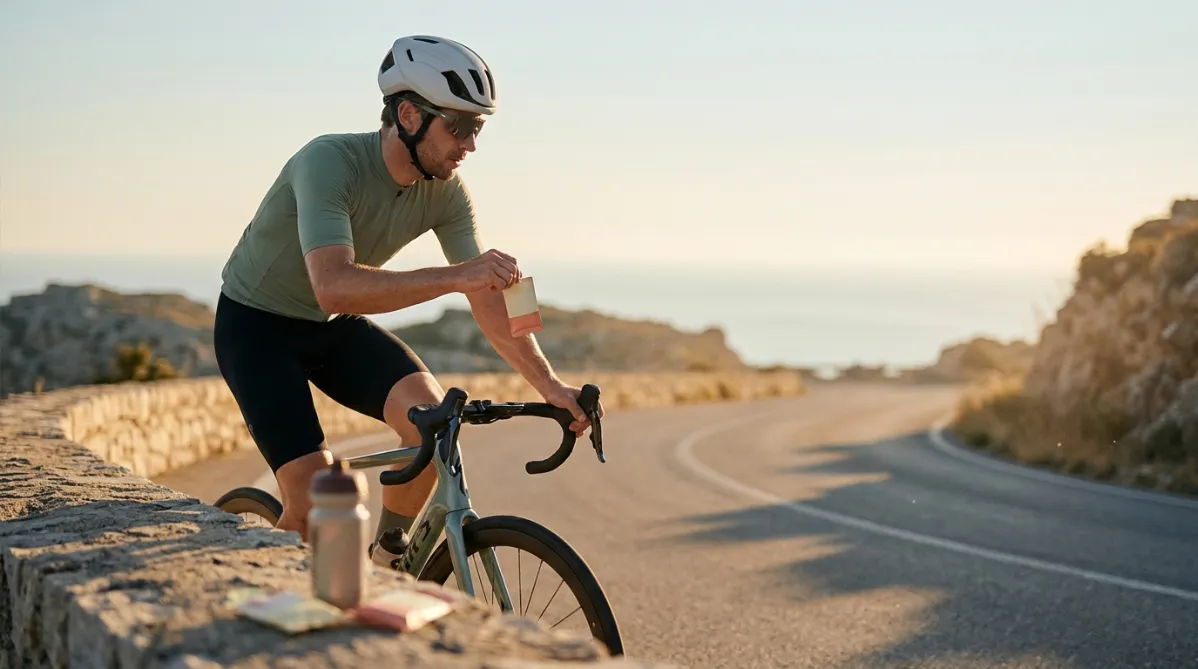
A cyclist in profile, riding a sleek road bike along a quiet coastal road in warm golden-hour light, shot from a low side angle with a shallow depth of field. The rider wears a muted sage-green jersey, black bib shorts, a matte white helmet, and sunglasses. Their face shows calm, focused fatigue, with a faint sheen of sweat on the forearms. One hand is lifted slightly from the handlebars, holding a small, unbranded matte gel packet in soft cream and coral tones, just before opening it. The road curves gently behind them toward a hazy, softly blurred horizon of pale sea and distant hills, with long amber shadows stretching across the asphalt.

In the foreground, slightly out of focus, a few gel sachets and a bike bottle rest on a weathered stone wall at the left edge of the frame, adding editorial depth. Fine dust and sunlight glow in the air. The palette is warm and restrained: butter yellow, soft peach, sage, and slate blue, with gentle film-like grain. The composition leaves open negative space in the upper right, a pale gradient sky, for headline overlay. The overall look is a modern, minimalist sports-science magazine photograph: natural, premium, and clean, with realistic textures, cinematic but understated color grading, and no text, logos, or graphics.
nutrition

Géis de Bicarbonato Durante a Pedalada Aumentam 12 W no Teste Final de 3 Horas

BY DR. GYMBRO ·

E se o melhor momento para tomar bicarbonato não for antes da prova, mas durante ela? Um estudo cruzado randomizado com 11 ciclistas treinados testou géis de bicarbonato + carboidrato ao longo de 3 horas de pedalada. Na fase de fadiga posterior, a potência no teste de 12 min foi 12 W maior que com apenas carboidrato, sem aumento de sintomas gastrointestinais. Sprints e esforços de 2 min não mostraram ganho significativo, a amostra foi pequena e os produtos eram da MNSTRY. Veja o que os números realmente dizem.
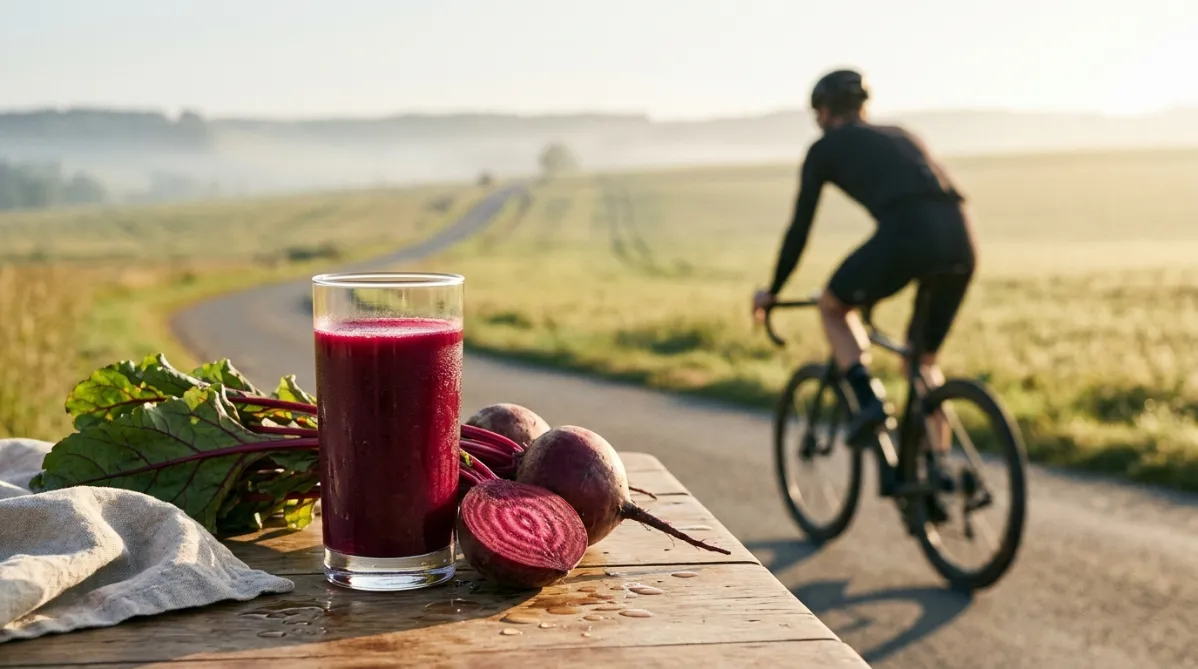
A cyclist in a fitted matte-black kit, shot from a low three-quarter angle, rides a sunlit country road at early morning, slightly out of focus with soft motion blur on the wheels. In the foreground on the left sits a rustic wooden table with a tall glass of deep magenta beetroot juice. Condensation beads on the glass, and the light catches its vivid jewel-toned color. Beside it lie two whole beetroots with their leafy red-veined greens still attached, and one halved beet shows concentric crimson-and-pink rings. A small linen napkin and a scatter of water droplets add an editorial still-life feel.

The background is a gently rolling landscape with golden-green fields and a thin ribbon of asphalt curving toward the horizon. Pale mist hangs low and warm sunlight comes from the right, creating long soft shadows and a golden rim light on the glass and the cyclist's silhouette. The shallow depth of field keeps the juice and beets crisp while the rider stays a dreamy blurred suggestion of speed.

The palette is rich magenta, burgundy, warm cream, sage green, and soft gold, with muted, slightly desaturated tones in the background so the beetroot color stands out. The composition follows the rule of thirds, with the still-life in the lower left third and open negative space in the upper right for the title. The overall look is a clean, modern lifestyle-magazine photograph with natural film-like grain, calm and athletic, and no text, logos, or futuristic elements.
nutrition

Suco de Beterraba Antes de um Teste de Contrarrelógio: Como 0,5 L Reduziu os Tempos de 4 km e 16,1 km em Cerca de 3 %

BY DR. GYMBRO ·

Um pequeno, porém influente, ensaio cruzado de 2011 investigou se um único gole de suco de beterraba poderia melhorar testes reais de ciclismo. Nove ciclistas competitivos consumiram 0,5 L de suco rico em nitrato (cerca de 6,2 mmol) aproximadamente 2,5 h antes da corrida. O nitrito plasmático mais que dobrou, a potência média subiu e os tempos de 4 km e 16,1 km melhoraram em 2,8 % e 2,7 %, respectivamente. O consumo de oxigênio permaneceu inalterado, sugerindo uma economia de pedalada ao invés de um aumento da capacidade aeróbica. A seguir, o protocolo, os números e as limitações dos dados.

This page is available in